12
JUN
blog category
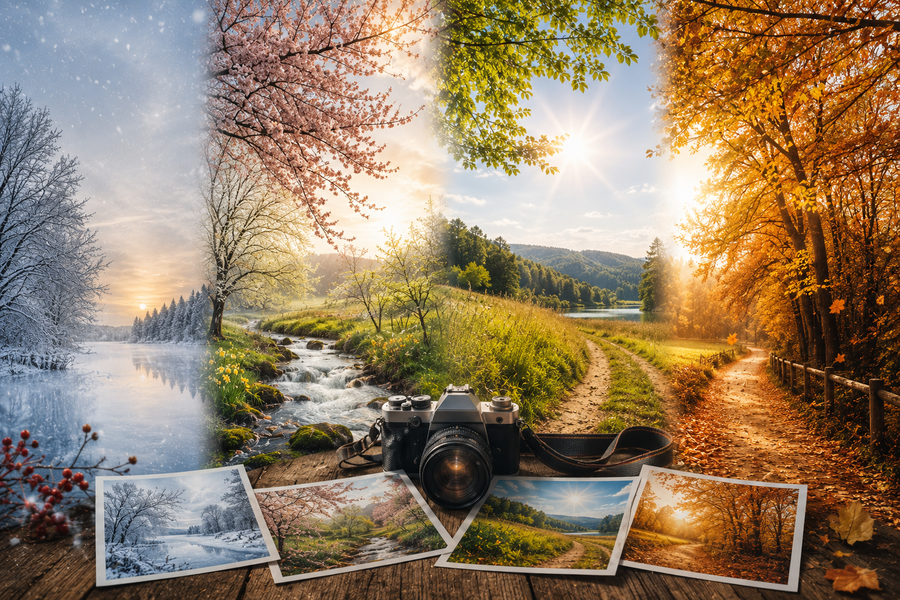
Capturing the Seasons: How to Tell a Story Through Light, Color, and Time
There's a reason the word "season" sits at the heart of our competition's name. Seasons aren't just a backdrop — they're a storytelling device. The way light falls in autumn, the stillness of a winter morning, the burst of color in spring, the heat haze of summer afternoons — each carries its own emotional language. For photographers, learning to read and use that language can transform an ordinary photograph into something unforgettable.
Why Seasonal Light Changes Everything
Light is the foundation of every photograph, and it shifts dramatically across the year. The low, golden light of late autumn creates long shadows and warm tones that feel nostalgic and reflective. Winter light, often flat and cool, can strip a scene down to its essential shapes and textures — perfect for minimalist or moody compositions. Spring brings a softness, with diffused light through new leaves and blossoms, while summer's harsh midday sun challenges photographers to think creatively about contrast, shade, and timing.
Understanding these qualities isn't just technical knowledge — it's part of developing your visual voice as an artist.
Finding Stories in Transition
Some of the most compelling fine art photography doesn't focus on a season at its peak, but on the moments of change between them. The first frost on a still-green leaf. The last light of summer fading into early autumn shadows. These transitional moments often carry a quiet emotional weight — themes of impermanence, memory, and change that resonate deeply with viewers and jurors alike.
If you're working on an entry for an upcoming category, consider: what transition, mood, or feeling does your image capture? Is it a moment frozen, or a moment passing?
Color as Emotion
Color theory plays a powerful role in seasonal photography. Cool blues and greys can evoke solitude or calm, while warm oranges and golds often suggest comfort, nostalgia, or energy. Even within a single season, color choices — whether through natural elements, processing, or composition — can shift the entire emotional tone of an image.
Fine art photographers often use color not just to represent what a scene looked like, but to communicate what it felt like.
Tips for Your Next Submission
- Shoot during transitional hours — early morning and late afternoon often provide the richest, most directional light.
- Look beyond the obvious — instead of a wide seasonal landscape, consider a small detail that captures the essence of the moment.
- Think about narrative — what story does this image tell, and what comes before or after this frame?
- Edit with intention — subtle color grading can reinforce the mood you're aiming for, but avoid over-processing that masks the authenticity of the moment.
Bring Your Vision to PHOTO SEASON
Every edition of our competition celebrates the diversity of perspectives photographers bring to similar themes. No two interpretations of "season" or "transition" are ever the same — and that's exactly what makes fine art photography so powerful.
If you have an image that captures a moment of light, color, or change that speaks to you, we'd love to see it. Explore our current categories and submission guidelines to get started.
Questions? Reach out to us at info@photoseasons.com — our team is happy to help.